Posts in Category: yard
Ruined Beauty
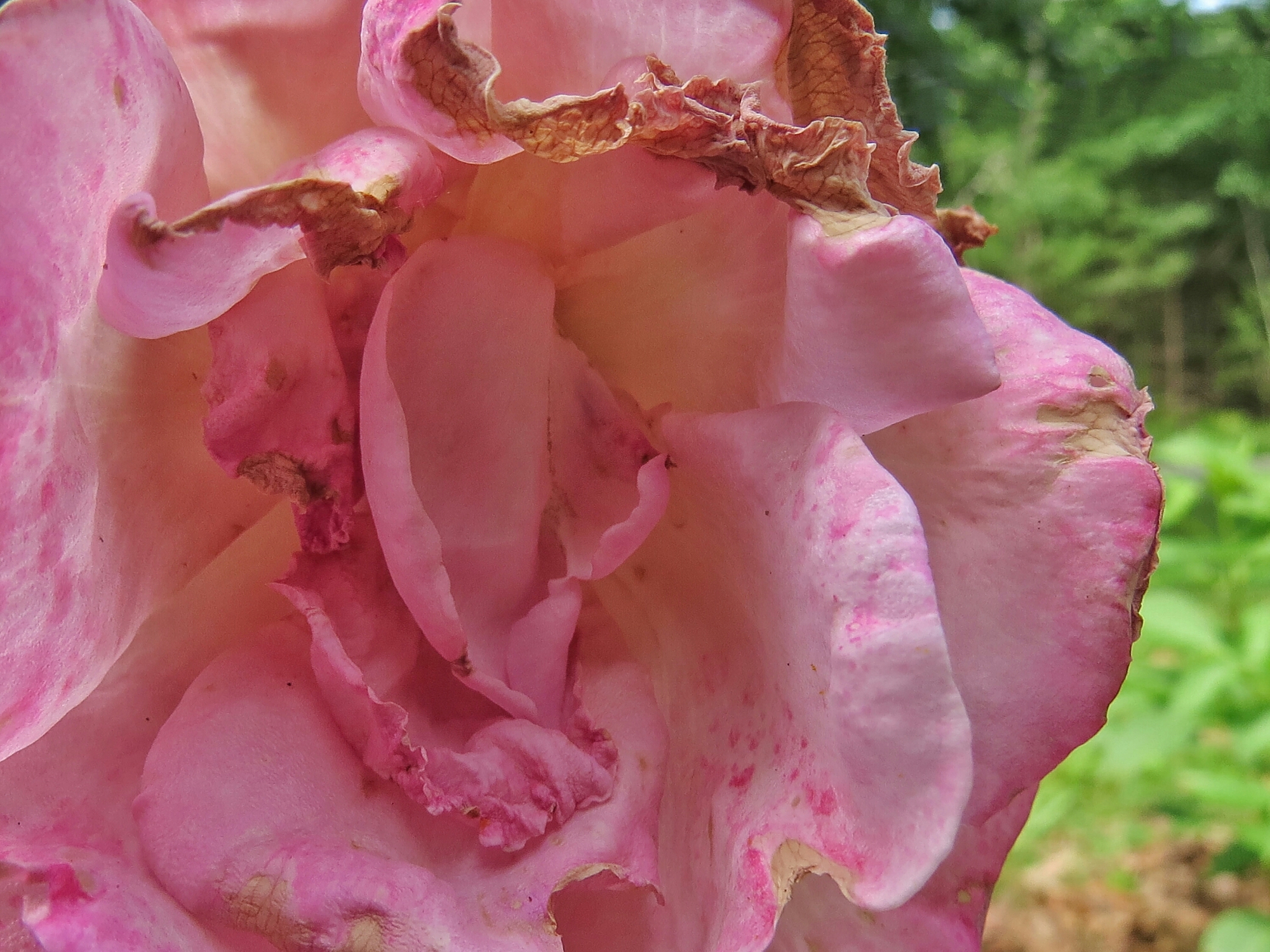
The Rose is blown and by. And yet still beautiful. A wreck of a Rose. And yet it still draws the eye and awakes the soul. Okay, so maybe that last is a bit over the top :-), but I certainly see an attraction. Form, color, texture. And a hint of nostalgia to knit it all together emotionally. This is from our yard yesterday morning after a day of thunderstorms.
Canon SX50HS. 24mm plus 1.5x Digital tel-extenter for a super-macro. ISO 100 @ 1/160th @ f4. Processed in Snapseed on my tablet. Obtrusive power-lines in the upper right corner retouched out using the eraser tool in Handy Photo.
Foxglove!

The light was lovely late yesterday afternoon in the yard, and the Foxglove is still in full bloom. This is the ZEISS Touit 50mm f2.8 macro again, pulled back for more of a telephoto macro effect, which the Touit is fully capable of, with an equivalent focal length of 75mm.
Sony NEX 3N with the ZEISS Touit 50mm macro. I used Aperture preferred to stop down for extra depth of field, which I think is effective here. F14 @ 1/80th @ ISO 640. Processed in Snapseed on my tablet.
Tulip Macro

I have the ZEISS Touit 50mm macro for my Sony NEX 3NL to try out for a few weeks. I have missed true macro ability with the kit 16-50mm zoom. This shot is just messing around in the yard yesterday. How close can I go? I used the “background defocus” tool in Superior Auto to get a smaller aperture and more depth of field, but that pushed the ISO up higher than I would have liked. Still, not bad for a hand-held, natural light shot.
Sony NEX 3NL with ZEISS Touit 50mm macro. f11 @ ISO 1600 @ 1/500th. Processed in Snapseed on my tablet.
Daffodil Up Close

The Daffodils in the yard are finally blooming…weeks late…but brave in the thin Maine sunshine. I went out the other morning, on my way to more challenging photo-ops down by the sea (I hoped) but I could not resist working the Daffodils. The back light coming in low made them glow.
Sony NEX 3NL with 16-50mm zoom. Macro (Superior Auto) adjusted for depth of field. f5.6 @ ISO 200 @ 1/160th. Processed in Snapseed on my tablet.
The Crocus of Spring

After our long hard Southern Maine winter, I almost missed the first Crocus. The snow was barely off the Crocus patch when I left for two weeks in Texas and California. I came back to find the Crocus beginning to fade. There is still one brave plant in full bloom, so, of course, I had to photograph it!
Sony NEX 3NL with 16-50mm zoom. Macro (Intelligent Auto Plus) @ 75mm equivalent plus 2x Perfect Image Zoom for 150mm equivalent field of view. In intelligent Auto, you can fine tune the settings. I used the “background defocus” tool to shift the exposure for the greatest possible depth of field. f29 @ 1/160th @ ISO 800. Processed in Snapseed on my tablet.
Downy Male

The female Downy Woodpecker returned to our feeding station almost a week ago, but it was not until yesterday that we saw the male with her. When she is alone, she will sit on the arm that holds the suet or on the suet itself while I stand on the deck 15 feet way. When he is with her, both are off as soon as they see my shadow on the inside of the glass of the deck door. Still, he spent a lot of time in the trees beyond and above the feeding station yesterday, and I was able, thanks to the digitally enhanced reach of the zoom on my OM-D E-M10, to get some decent shots of him foraging. That little red cap on the very back of his head makes him such a jaunty fellow 🙂 (Or that is what I think.)
Camera as above. 75-300mm zoom. 600mm equivalent with 2x digital extender for 1200mm equivalent field of view. Shutter preferred. 1/800th @ ISO 500 @ f6.7. Processed in Snapseed on the Samsung Galaxy Note 10.1 2014.
Chickadee Dee Dee

We had another day in our slow-coming spring yesterday when the sun was warm enough to stand out on the back deck (still in fleece and coat, gloves and winter hat of course) while the birds were at the feeding station, waiting, practicing patience, with my camera balanced on top of the home-made bean-bag head on my monopod. Chickadees, of course, a few Titmice, and the female Downy woodpecker. The male was around, but I never caught it on the feeding station, and, for the first time in months, we had a male Hairy for a few seconds at the suet, and for 30 minutes or more in the trees around the yard.
Olympus OM-D E-M10 with 75-300mm zoom. 600mm equivalent. Shutter preferred. 1/800th @ ISO 320 @ f6.7. Processed in Snapseed on the Samsung Galaxy Note 10.1 2014. If you look very closely you might be able to see where I edited out obtrusive out-of-focus branches with the Retouch tools in Handy Photo.
Titmouse for Tuesday

This is another shot from my brief session on the back deck on our one warmish day in the last month 🙂 Almost all of my pervious shots of birds at my back deck feeding station have been through the thermopane glass of the sliding deck doors. It is perhaps not surprising at all what a difference being on the right side of the glass makes in the clarity and detail of the images. It is about time to rebuild the artificial thicket around the feeding station. I am down to just a few branches the squirrels have not managed to break yet. Still enough remains so that with some creative editing using Handy Photo’s Retouch tools, I am able to manage a somewhat natural looking image…as in this Titmouse shot. I really like the gray on gray effect here…soon the bokeh will turn green (or so I fervently hope), but I will miss this effect.
Olympus OM-D E-M10 with 75-300mm zoom. 600mm equivalent. Shutter preferred. 1/800th @ ISO 250 @ f7.1. Processed in Snapseed and Handy Photo on the Samsung Galaxy Note 10.1 2014.
Downy

Not that this bird looks particularly downy, or soft, but that is what it is. Downy Woodpecker. The smaller of our two closely related woodpeckers here in New England, and in most of the country. We get both at our feeders, but only the Downy has been around through much of this long hard winter. This is another shot from one mildly warmish day when I got out on the deck to stand and photograph birds at the feeder 12 feet away. A real treat.
Olympus OM-D E-M10 with 75-300mm zoom. 600mm equivalent plus 2x in-camera digital tel-extenter for 1200mm equivalent field of view. Shutter preferred. 1/800th @ ISO 200 @ f9. I was shooting, by the way, off a monopod with my custom bean bag head. I really appreciate the extra stability it provides, and it is super easy to use. Processed in Snapseed and Handy Photo on the Samsung Galaxy Note 10.1 2014. Handy Photo allowed me to remove the suet cage from the left side of the image, quickly and easily, giving this feeder shot a more natural look.
All in a Day in the Backyard.

From dawn to dusk in our backyard yesterday. From an awesome -11 degree sunrise to a 5 PM blizzard. We do it right in Maine 🙂 The way life is supposed to be. (And as I get the snowblower out of the basement to deal with 8 inches of fresh snow this morning I am thinking, “yeah, maybe not so much 🙂
Still, it is good discipline to find the beauty where you are, and to celebrate it. Keep those eyes open and those cameras clicking! It is good for the soul.
Sony NEX 3NL with 16-50mm zoom. 24mm equivalent. Sunrise: ISO 1000 @ 1/160th @ f4. Blizzard: ISO 500 @ 1/160th @ f4. Processed in Snapseed and Photo Editor by dev.macgyver, and assembled in Pixlr Express on the Samsung Galaxy Note 10.1 2014.