


If you develop the habit of looking closely at nature you will find all kinds of interesting and wonderful photo opportunities…moss, lichen, flowers, mushrooms and other fungi, bugs and even the intricate textures of rock and tree bark.
With a standard full sized DSLR camera with interchangeable lenses you would need a dedicated macro lens, add-on macro lens/filters, or extension tubes between the camera body and a fixed focal length normal lens to take advantage of the macro world…and, most likely a tripod rigged to get down and close. Many also use a special flash called a ring-flash for close up work. Macro is somewhat of a specialty among serious photographers, requiring special equipment and techniques as well as the eye to see small.
Today’s P&S superzooms almost all have excellent macro ability. Many will focus to 1 to 2 centimeters from the front lens element at wide angle. Some, like the Canon SXxxHS series, will focus on something touching the front element. Many have dedicated Macro Modes, which not only bias the focus system for close focus, but often add some digital trickery to defocus the background to simulate (for better or worse, see below) the effect of a longer focal length macro lens on a full sized DSLR.
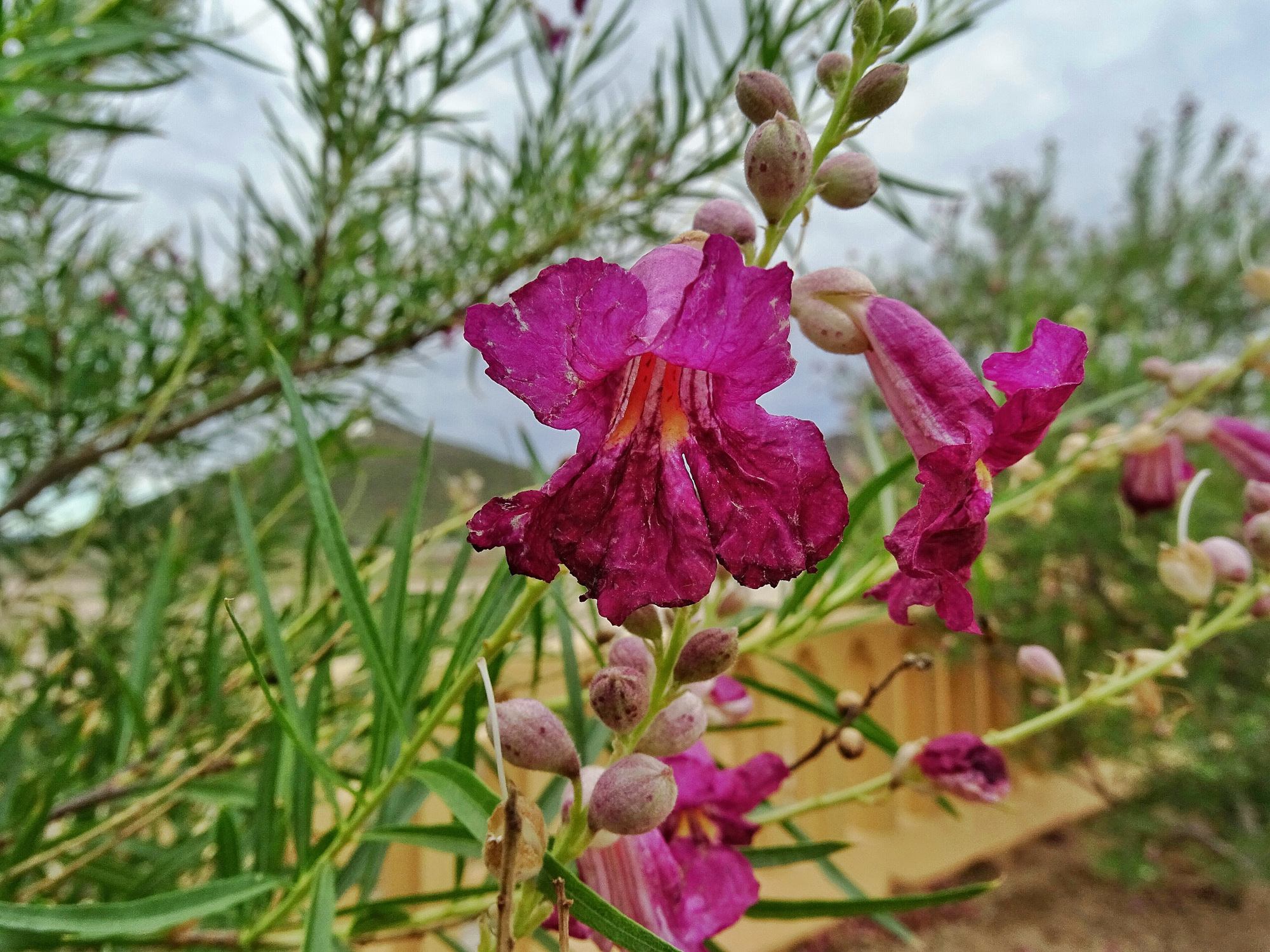
P&S macro does have its disadvantages…so called. Both of the often sited disadvantages have a positive side that you can use to your advantage.
Characteristically P&S superzooms focus closest at their widest angle. This makes the kind of macros that show a close up view of you subject in its environment…with background or surroundings…easy and natural. And because the wide angle on a P&S is, in reality, a very short focal length lens (the actual focal length of a 24mm equivalent lens on a P&S is 4.3mm), and because the shorter the focal length of the lens the greater the depth of field, much of at background or surrounding will be in relatively good focus. This produces an interesting effect of its own, as the image above demonstrates, but it does not produce what most photographers and photo enthusiasts think of, or recognize as, the macro effect. Because most macro work is done with full sized DSLRs and specialty lenses that have real focal lengths of between 60-100mm, or with add-on lens/filters or extension tubes that restrict the depth of field, we are used to seeing macros with the subject isolated against an out of focus background. In fact, the challenge for folks who shoot with real macro equipment is to get the whole subject in focus at the same time. That is much easier, though some care is still needed, with a P&S macro. Those cameras with a dedicated Macro mode often use special in-camera processing to mimic the full sized DSLR macro effect.
The other disadvantage of P&S macro is that with close focus at the wide angle end of the zoom and focus under 5mm you have to be really close to your subject…often too close for practical work. You get pollen on your lens. You spook the bug. Worse, you get in your own way…the shadow of the camera covers the subject in any kind of sun or strong daylight.
Let me say right here that one of the real advantages of P&S macro is that you almost never need a tripod. The image stabilization on today’s P&S superzooms is amazingly good. If you take a number of shots…or use the continuous shooting mode on your camera…you will get at least one sharp photo in almost any light. It is easy to do, since, with the exception of bugs, most macro subjects will not be moving much if at all.
Both of the disadvantages above can be overcome, at least in part, by using a slightly longer focal length on the zoom. This is not possible with all P&Ss, but it is with the three I am most familiar with.

The Nikon superzooms have (or had, last time I checked) a Macro Mode that sets the zoom at about 34mm equivalent. This is a good compromise…allowing a more comfortable working distance, and a bit more separation between subject and background. Nikon emphasizes that separation with special background processing. At the same time, 34mm equivalent still has enough depth of field to make it possible to keep the whole of most macro subjects in focus at the same time.
Canon SXxxHS series cameras will focus, as above, on the front surface of the lens at wide angle…but if you move the zoom off wide angle you loose close focus all together. To overcome that, I always use the digital zoom…on the Canons there is a special processing mode that provides a 1.5 and 2x digital tel-extender that has remarkably good performance, especially with macro subjects where the sensor is flooded with detail. That puts me out at 36 and 48mm for good working distance, and still gives me the depth of field of the 24mm equivalent. Best of both worlds.
On the Sony, closest focus is also at full wide angle, where you can get to 1cm. However, you can zoom out to 50mm, or even 85mm, and still focus under 5cm. Again, that gives you a good working distance, good scale, and, with care, enough depth of field.
Both the Canon and the Sony allow for Program Shift while shooting macros. It is kind of difficult to access on current Canons as it involves simultaneously pushing two buttons, but on the Sony it is dead easy as Program Shift is the default action of the real control wheel under your thumb as you grip the camera. Program Shift on any camera allows you to increase or decrease the depth of field by adjusting the size of the aperture (f-stop) without upsetting the basic exposure (it automatically compensates by adjusting the shutter speed to keep exposure balanced). You don’t really need to understand shutter speeds and f-stops and exposure to use Program Shift for macros. All you need to know for well focused P&S macros is that you want a larger f-stop number (which corresponds to a smaller aperture). Most P&Ss will automatically select a larger aperture over a smaller one, so your basic exposure is going to be something like f3. You want to dial it up to f5.6 or f6.3. That will give you enough depth of field, on a P&S, for most subjects. The shutter speed will go down, making it harder to hold the camera still long enough to get your picture, but between the excellent image stabilization and taking a few shots of every subject, you should still get at least a few sharp images in almost any light.
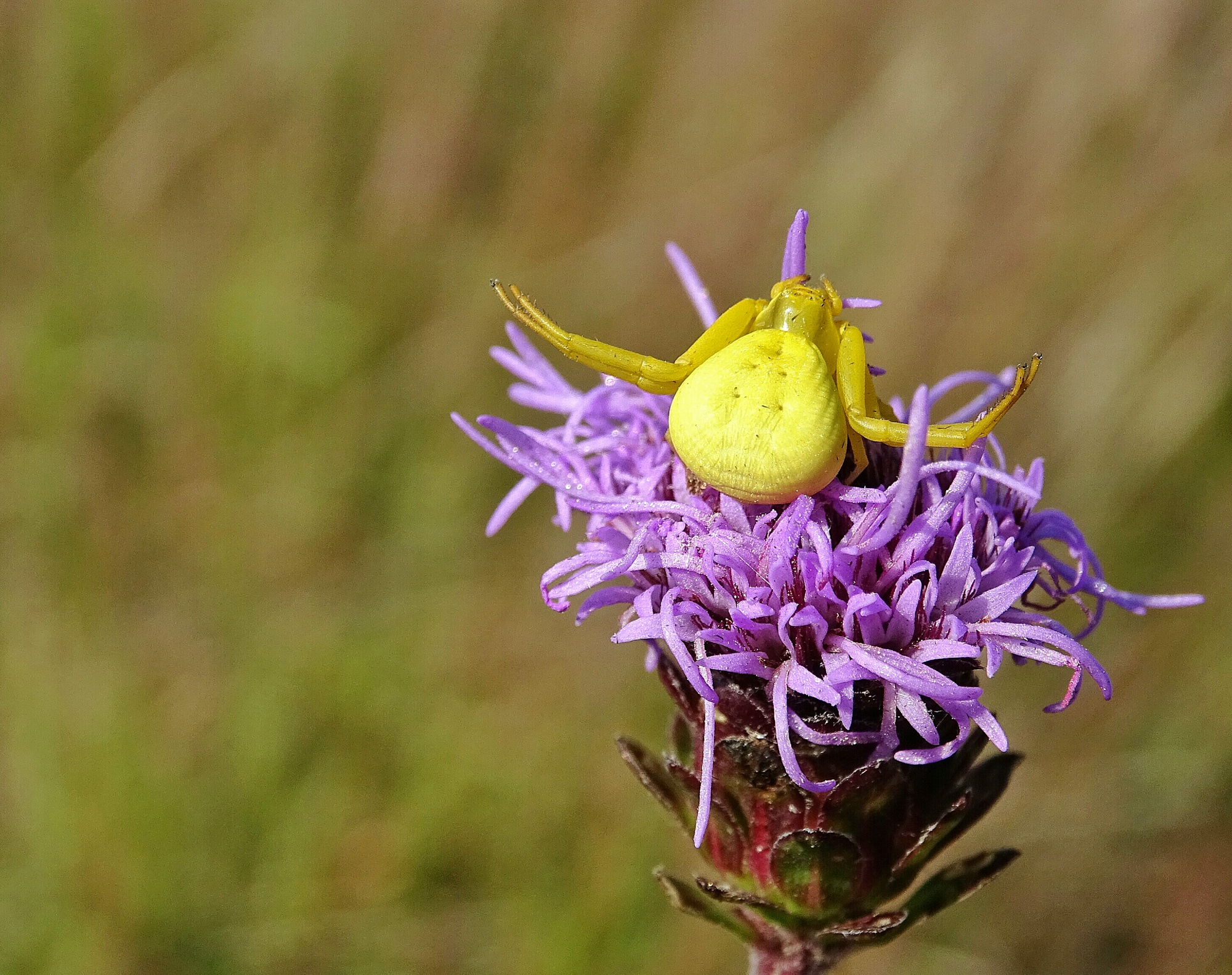
Lighting on macros, and especially avoiding the shadow of the camera, can be very tricky. All I can say is that if I take the time to try all the angles I can generally find one that works. Sometimes you still get camera shadow in the image, but as along as it does not distract from or obscure the subject it might be okay.

Some of the best macros are taken in the indirect light of the forest floor. Again, the superior image stabilization of the P&S superzoom comes into play to allow these kinds of shots hand held.


At the same time there is nothing like the detail of a shot in full sun. I used all the tricks here, with the Sony HX400V.


Finally, don’t ignore the other end of the zoom, or anything in between when shooting macros. Many P&Ss will focus closely enough at the long end for a true macro effect, especially if you use digital zoom or one of the specialized processing modes that give an expanded zoom range. The Canon SXxxHS series focus (based on current models at the time of this writing) to under 5 feet at full telephoto. At 1800mm or 2400mm equivalent field of view (using the digital tel-extender) that can produce stunning macro results.

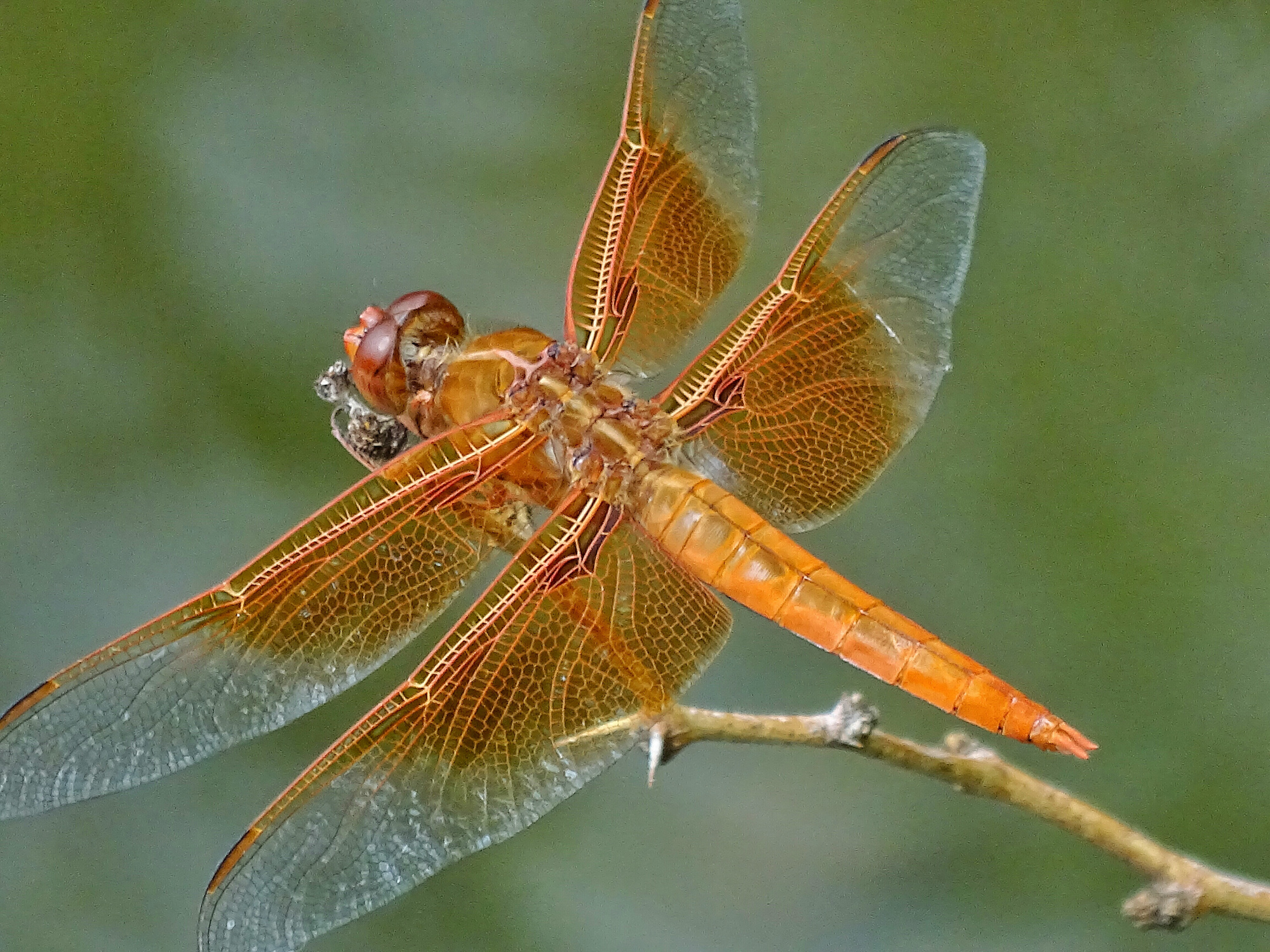
So, are you ready to make macro with your P&S superzoom?
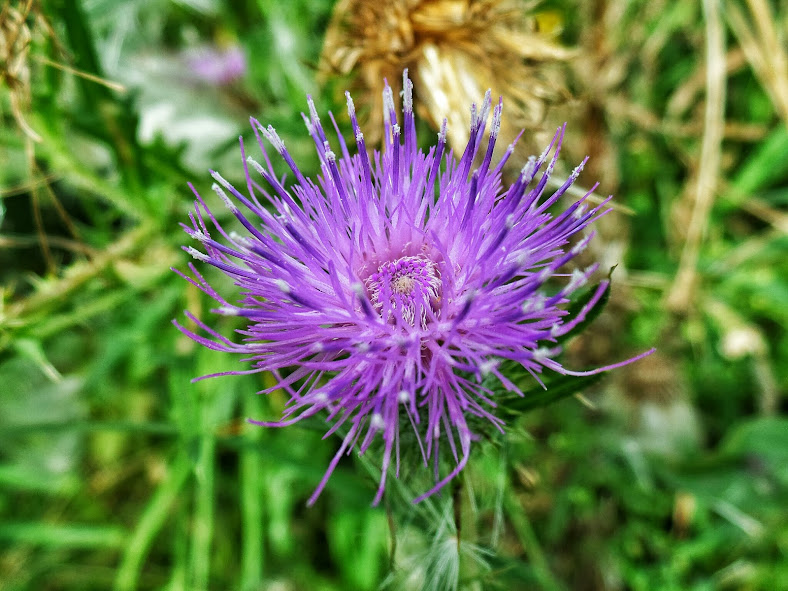 I was a photographer before I was a birder. I watched (photographed) wild-flowers, and mushrooms, and the play of light across the landscape before I ever seriously looked at birds. Oh I had tried photographing birds and butterflies, but this was back in the days of film…and photographing anything that moved was 1) expensive, since you had to pay for every missed shot, and 2) frustrating without very expensive equipment. I never had much luck with the film or the gear I could afford.
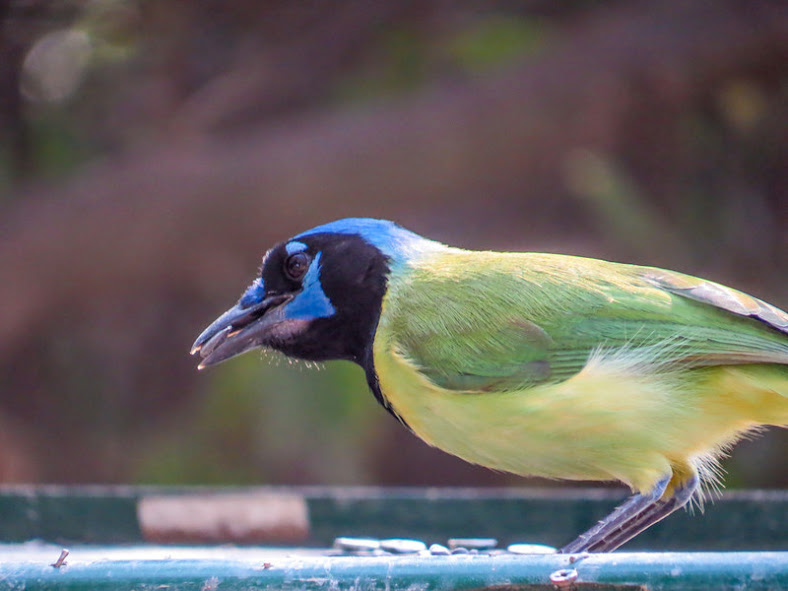 I soon invested in good binoculars (which I could just barely afford) and a good field guide. Then I invested several years in learning to bird. It was a lot of fun, and very satisfying. I am, in fact, over 20 years later, still learning 🙂 and it is still both fun and satisfying.
 And the zoom range has steadily grown. I am using a Point and Shoot with a 50x zoom these days. It has the fields of view of everything from a 24mm wide angle to a 1200mm super telephoto (up to 2400mm with the built in digital tel-converter)…all in one compact camera and lens. It does not fit in my pocket, but it is way lighter and more compact than any DSLR, and there is, in fact, no DSLR lens made that will reach 1200mm, let alone 2400mm. My 50x digital point and shoot also has continuous shooting at 3 frames per second, and a sports mode that makes shots of birds in flight not only possible, but fairly easy. It will shoot macros with the subject touching the lens at wide angle, and focuses to 5 feet even at 2400mm equivalent. It is a truly amazing camera.
 About 3 years ago I got seriously interested in dragonflies. I am now learning my odonata. I am not however, like some students, netting them…nor am I studying them through binoculars as I did my birds. The key for me was finding that I could photograph them with my long-zoom point and shoots, and then bring the images home for study and comparison to field guides…and, even better…to the great wealth of odonata resources on the web. (You have not seen a dragonfly image until you have seen one taken at 2400mm equivalent from 5 feet.) I joined a couple of on-line groups of like minded students of odonata, and I draw on the expertise of the whole odonata community as I need it (which is still very often). And I am learning. Most of the bugs I have photographed and identified from images, I can now identify by sight when I see them in the field…many of them even on the wing. I have learned as much about odonata in 3 years, as I did in 10 as a beginning birder.
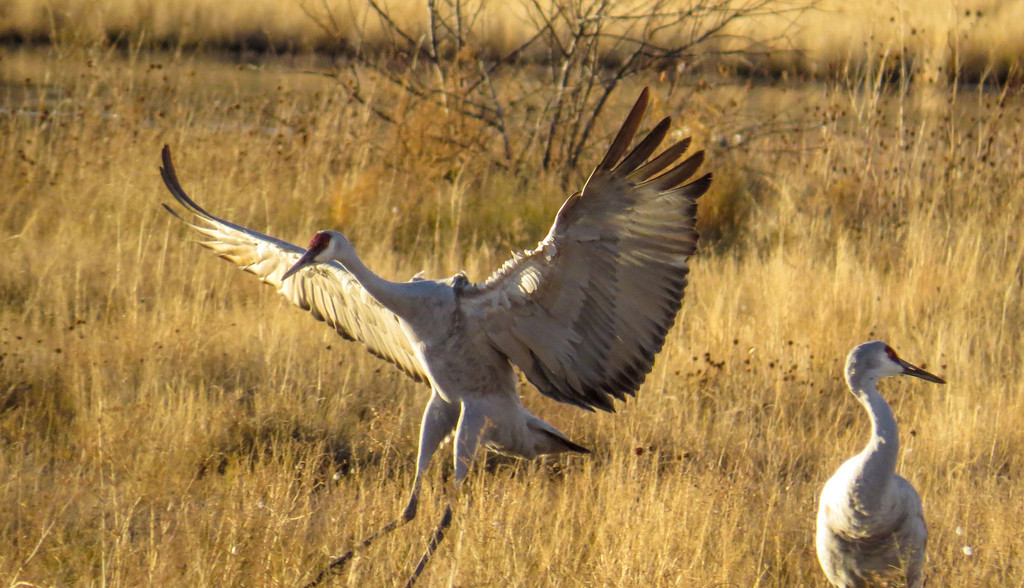 And that, folks, is the theory behind the Point & Shoot Naturalist. I intend to explore this possibilities of this new way of leaning, and celebrate the learning here. Oh, we will probably discover the limitations of Point & Shoot Naturalism as well, but my feeling is that, on balance, learning to appreciate nature with a camera in hand is a pretty good idea…and may open nature to a whole new generation of naturalists, and maybe even to some of my own generation who might not other wise have ever taken an interest.