Posts in Category: Kennebunk
Goldfinch against the light

American Goldfinch, Kennebunk, Maine, USA — This Goldfinch posed against strong backlight, straining at the limits of comfort for a digital sensor, but it makes, I think, an interesting portrait. The bird was only about 7 feet from me, and some extra post processing brought up all the detail the excellent ZEISS lens on the Sony can provide. Sony Rx10iv at 600mm equivalent. Program mode with my custom birds and wildlife modifications. Processed in Polarr and Apple Photos. ISO 125 @ f4 @ 1/500th.
Brooding on winter…

Something a bit different from my backyard birds today. 🙂 We are expecting our first real snow tonight, but for yesterday the landscape was just huddling under a brooding sky, waiting on winter to decide to come. That tree out there has had, some years, a Snowy Owl, and I always start checking it every trip to the beach along about now. Not yet. Maybe not at all this year. Still waiting on that decision as well. Sony Rx10iv at 24mm equivalent. Program mode with auto HDR. Processed in Polarr and Apple Photos. Nominal exposure: ISO 100 @ f4 @ 1/500th. -.3 EV.
Not so gold finch…

American Goldfinch: Kennebunk, Maine, USA — I still have thistle seed out for the Goldfinches, which have not been regular at our feeders since early August. A bunch came through last week, on their way south, but we have one that is hanging around. Not so gold, but a still a pretty little bird. It is, of course, just as interested in the sunflower seed feeder I moved up onto the deck feeding station from out under the trees, so maybe that is really what is keeping it. 🙂 Sony Rx10iv at 600mm equivalent. Program mode with my custom birds and wildlife modifications. Processed in Polarr and Apple Photos. Got to love that bokeh. ISO 400 @ f4 @ 1/500th.
Titmouse in the mist…
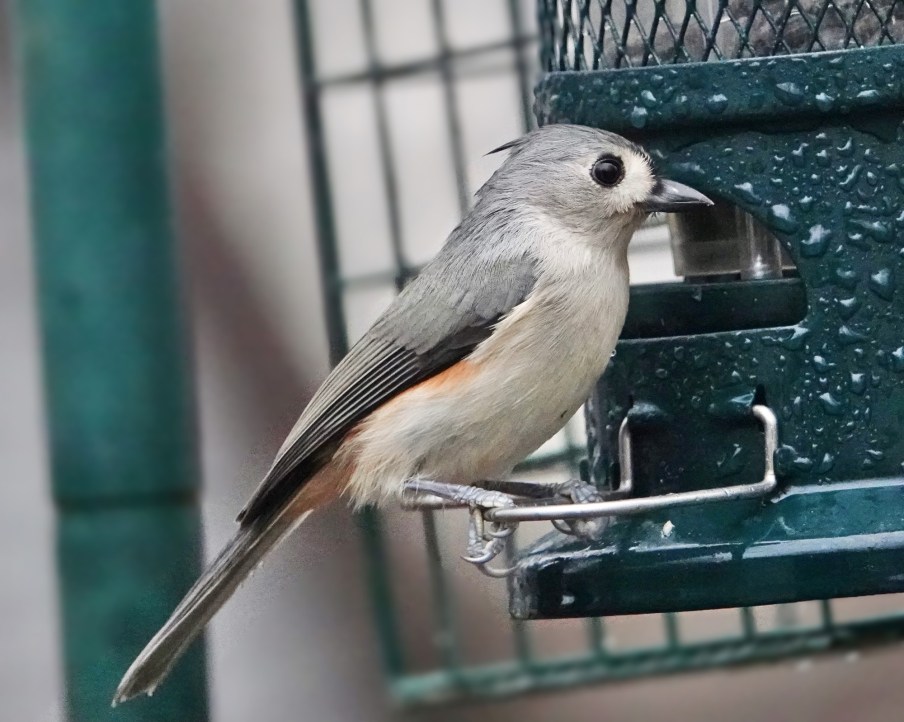
Tufted Titmouse: Kennebunk, Maine, USA — Another shot from a cold misty December morning, with very little light. Shooting at ISO 3200. In addition to my normal low light noise reduction, I also used a brush to remove residual noise in the “open” areas of the image, leaving it in the bird itself and the feeder, where detail masks the noise, and removing it would soften the detail. Sony Rx10iv at 600mm equivalent. Program mode with my custom birds and wildlife modifications. Processed in Polarr and Apple Photos. ISO 3200 @ f4 @ 1/500th.
Bluebirds in the mist…

Eastern Bluebird: Kennebunk, Maine, USA — Good light is the digital camera’s best friend. Today’s sensors are light hungry…they respond best to higher light levels. But, the truth is, you don’t always get good light, and good light for photography is sometimes not the best for showing the subtle colors and rich details of the birds around us. This shot was taken yesterday in the misty rain on our back deck, and it does an admirable job of capturing the look of a bluebird on a rainy day, even though the sensor was staining at ISO 2000. That is not all that high by full-frame standards, maybe, but is getting right on up there for an compact sensor camera like my Sony Rx10iv. Still, with just a bit of extra noise reduction in Polarr, it makes an effective shot. Sony Rx10iv at 600mm equivalent. Program mode with my custom birds and wildlife modifications. Processed in Polarr using my “low light” preset, which includes noise-reduction, and finished up in Apple Photos. ISO 2000 @ f4 @ 1/500th.
Hoover at the seed…

Chipmunk, Kennebunk, Maine, USA — I am not in the habit of naming our wild neighbors, but if I were, this one would be “Hoover”. It is dainty, even for a chipmunk, and it is the last of our chipmunk visitors to be a daily under the feeders. Perhaps it was assigned clean-up duty, or perhaps it is a first year chipper and does not have the whole “pack it away for winter” thing down yet. Whatever. I am fine with it until it climbs up and raids the sunflower seed feeder. Sony Rx10iv at 600mm equivalent. Program mode with my custom birds and wildlife modifications. Processed in Polarr and Apple Photos. ISO 800 @ f4 @ 1/500th.
Never enough bluebirds…
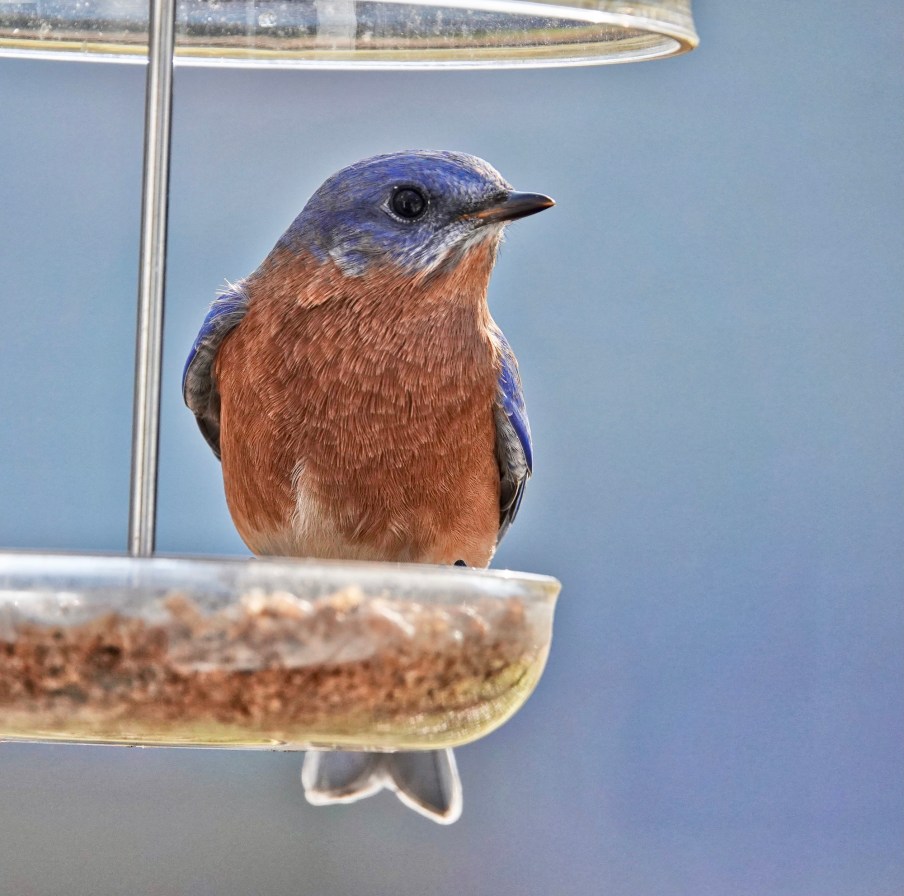
Eastern Bluebird: Kennebunk, Maine, USA — “Free as a bird” as they say…which is why we are always so thankful when the bluebirds frequent our feeders. I think is is the 4th year we have had them regularly, spring through mid to late summer, and then again in winter. This year they are early. They often don’t appear, after their fall sabbatical, on a daily basis until December and they have been with us several weeks already. We are appropriately thankful. 🙂 Sony Rx10iv at 600mm equivalent. Program mode with my custom birds and wildlife modifications. Processed in Polarr and Apple Photos. ISO 320 @ f4 @ 1/500th.
Success!

White-breasted Nuthatch: Kennebunk, Maine, USA — I have written before about the likelihood that nuthatches and chickadees expend more energy opening a black-oil sunflower seed than they can possibly get from the kernel. It must be a close run thing. Still they persist in prying the seeds open, so either they really like the taste or they do get more out of the effort than they put in. 🙂 Sony Rx10iv at 600mm equivalent. Program mode with my custom birds and wildlife modifications. Processed in Polarr and Apple Photos. Assembled in FrameMagic. ISO 400 @ f4 @ 1/500th.
Me and my sunflower seed…

White-breasted Nuthatch: Kennebunk, Maine, USA — I introduced the subject of how birds deal with food yesterday, specifically the differences between chickadees and nuthatches. Chickadees use their feet like hands to hold their seeds, etc. while working on them. This is the other method. The White-breasted Nuthatch carries the seeds off and finds a crack…in the wood of our deck rail here, but often in the bark of a tree…where it can wedge the seed in to hold it like a vice while it deals with getting it open and the kernel out. Sony Rx10iv at 600mm equivalent. Program mode with my custom birds and wildlife modifications. Processed in Polarr and Apple Photos. ISO 320 @ f4 @ 1/500th.
Me and my mealworm…

Black-capped Chickadee: Kennebunk, Maine, USA — I have been observing the different ways birds deal with food they take from our feeders. Specifically the clear difference between nuthatches and chickadees. Both chickadees and nuthatches carry the food away in their beaks, but chickadees use their feet like we use hands…to hold the food, while balanced on the other leg…as they dissect it. Nuthatches do not use their feet at all…they wedge the food in a crack to do their dissecting. It does not matter what kind of food. The chickadee here has a mealworm, but they deal with sunflower seeds the same way. Sony Rx10iv at 600mm equivalent. Program mode with my custom birds and wildlife modifications. Processed in Polarr and Apple Photos. ISO 400 @ f4 @ 1/500th. And a very happy Thanksgiving to you all.