Posts in Category: animals
More of Amboseli’s Elephants
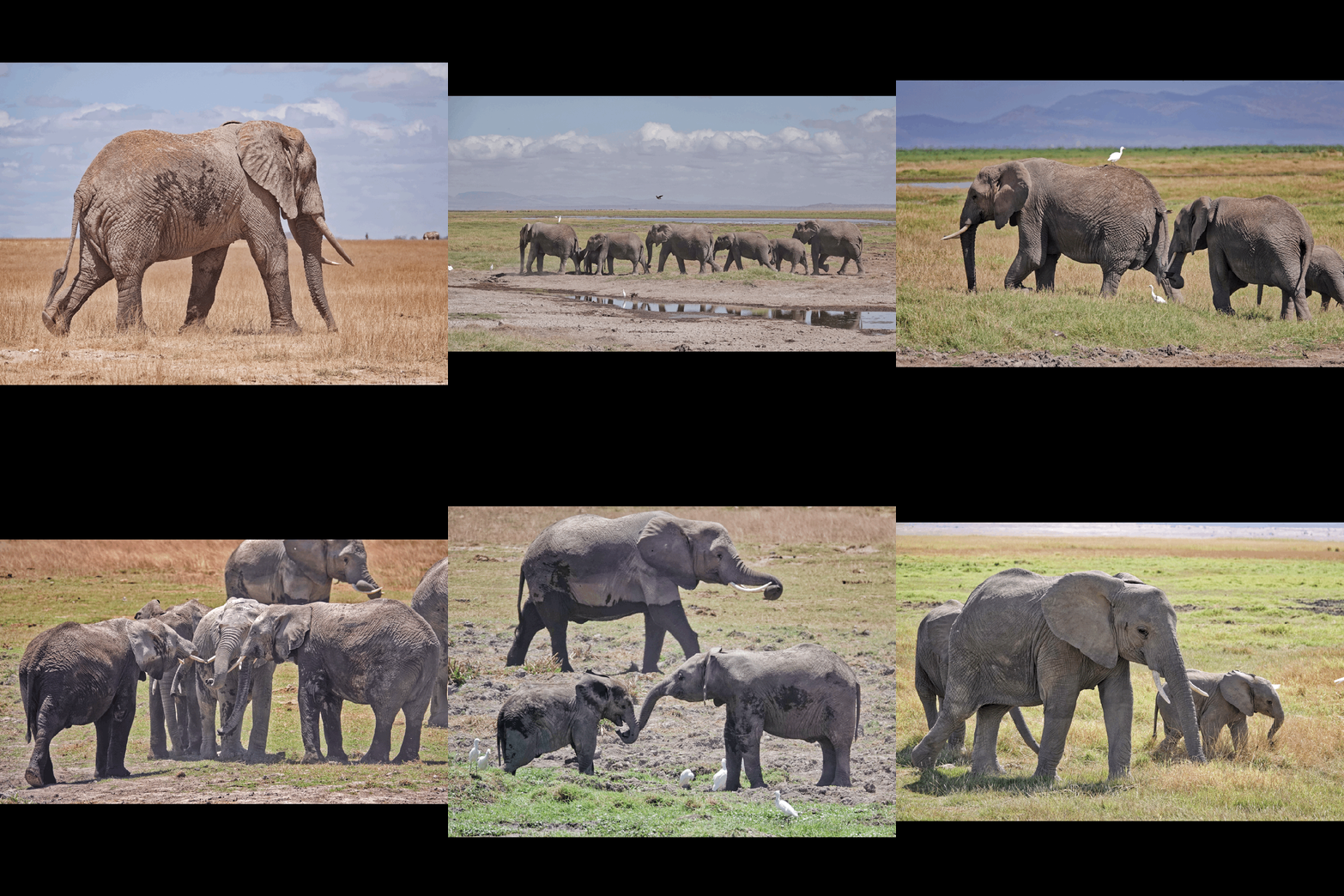
Amboseli National Park, Kenya
We saw many elephants in Tsavo East National Park and many in Masai Mara, but by far the most in Amboseli. The well watered marshes and old lake bed are lush grazing for elephants. Sony RX10iv in Program mode. Various focal lengths. Processed in Polarr and assembled in ImgPlay.
Eastern Black and White Colobus Monkey

I was surprised, and delighted, to find a large family group of Eastern Black and White Colobus Monkeys on the grounds of Elsamere Lodge where we stayed on Lake Naivasha, in the Rift Valley of Kenya. The field guides I had studied before leaving home show the primate at higher elevations and in much more dense forest. (The Colobus has a limited range in the Masai Mara, mostly around Siana Springs Camp…not anywhere near where we were going.) It is a beautiful creature. From what I can find on-line the Colobus at Elsamere are natural residents and have been living there for several generations at least. Sony RX10iv at various focal lengths. Program mode. Processed in Polarr.
Yard Turkeys

Yesterday’s day poem was about the turkeys who came wandering through the yard in the morning rain.
Carol came in in the middle of my Qi Gong
this morning, me still in my bare feet, tee-shirt
and pajama pants, and announced that there
were six turkeys in the back yard. I grabbed
my camera. Turns out it was a hen and five
well grown poults, looking for sustenance
among the fallen leaves under our trees in
steady rain…making a short cut, maybe,
across our yard. I got a few shots from the
open deck door before they disappeared up
the alley between our house and the house
next door…not an alley proper of course but
the narrow area between our house and the
hedge, full of strawberry plants and sunflowers.
Eventually they came out onto the front lawn
and I could stand in the front door and photo-
graph them as they passed under our little
apple trees. Carol had to leave right then or
be late for a funeral, so she went out, and
of course they all took wing, the poults high
into the pines across the road and the hen
sailing down the road and across to the
woods at eye-level…which was all she could
manage in her mature dignity. Such a treat.
Making the most of a rainy morning. I got
back to my Qi Gong and the turkeys went
looking for sustenance in someone else’s
yard, or maybe the marshy edge of the wood.
What more can I say? Sony RX10iv at 600mm and 200mm. Program mode. Processed in Polarr and assembled as a video slideshow in ImgPlay.
Bustards and Baboons
Another Encounter story from Kenya. Wait for it to load and then page through using the controls in the bar at the top or bottom of the panel. You can expand it to full sceeen by touching the icon in either bar.
Tsavo East Lion Encounter

One of the most exciting encounters we have on our Kenya Safari. The PDF will take a moment to load. You can flip through it using the controls at the bottom or the top of the block.
Vervet Monkey


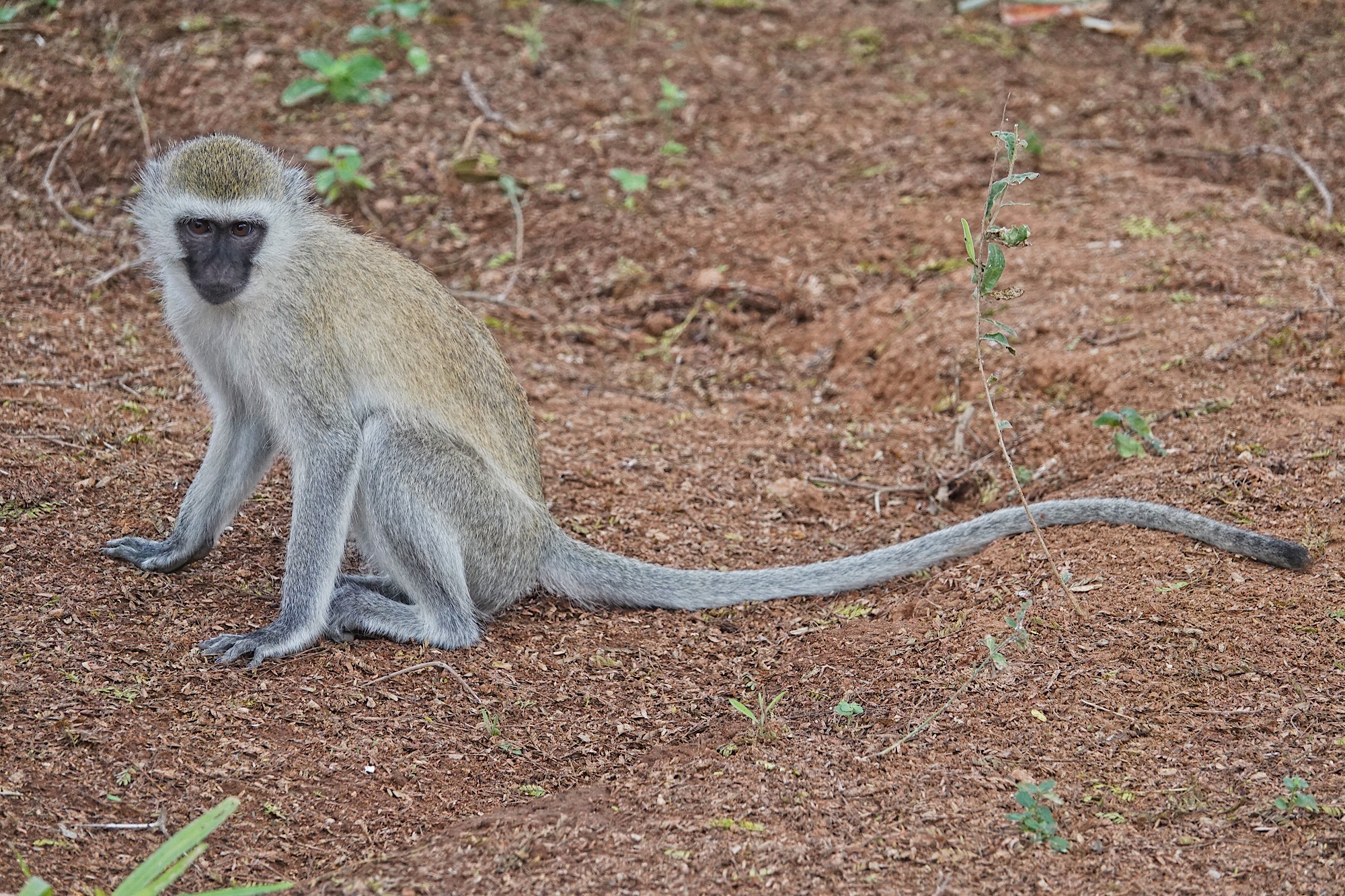
The most common monkey of all of sub-Sahara Africa is the Black-faced Vervet. It seems to have an affinity for humans (or perhaps only for human food) and is very apt to be seen around camps and lodges. In South Africa when I visited they were a real problem at lodges…so bold that at least one person was assigned to monkey duty at each meal, otherwise they would have been up on the tables helping themselves whenever your attention wavered. Even with a guard they got away the occasion slice of fruit or toast. In Kenya they were much more shy…or perhaps not as hungry…or the camp staff have done a better job of training them to be unobtrusive. Only at one camp we visited for lunch were there any number of them…yet we saw large troops in the bush. These shots are from a lodge well within Tsavo East National Park. Sony RX10iv at various focal lengths. Program mode. Processed in Polarr.
Inca Terns

Inca Terns, Pucu Sana, Peru
These are Inca Terns…certainly one of the most striking of the world’s tern family…from a fishing boat off Pucu Sana, Peru. Our visit to Pucu Sana was sandwiched in between the Amazon and the Galapagos, and for those of us who went on to the islands, was just an appetizer. Though they do not have Inca Terns on the Galapagos. 🙂
Sony Rx10iii at 600mm equivalent field of view. My custom action mode with continuous focus to cope with the motion of the boat. Processed in Polarr on my iPad Pro.
Newborn!

Harbor Seals, La Jolla, California
When the good people of La Jolla California built a curing sea wall atop a natural rock barrier to enlarge and improve a small portected beach where their children could swim, they may not have realized that they were creating an ideal pupping beach for the Harbor Seals of the area…but that is certainly what they did. Now, Children’s Pool Beach (or Casa Beach as it is officially called) is closed to humans during pupping season, but the tender spectacle of the Harbor Seals giving birth and nursing young, and hauling out during molt, brings over a million visitors to La Jolla each year, including many bus-loads of kids. Fair trade. 🙂 The colony of 200 seals at La Jolla is relatively unique. It is one of the few colonies on the mainland, the only one south of Ventura, and the only colony in an urban area. Seals are shy of humans, and La Jolla is one of the rare places where they tolerate people as close as they do here.
This is a newborn pup with its mother. In other shots you could see the umbilical cord still attached. Most pups are born on the beach, but they take to the water with their mother within 2 hours. Getting in and out of the water, even in the protected surf of the Children’s Pool, is the hardest challenge and mothers and pups seem to practice the maneuver over and over. The “nosing” behavior you see here promotes bonding between pup and parent and helps keep the pair from loosing each other in the water…and helps the pup to find its mother on a crowed beach.
Sony Rx10iii at 600mm equivalent field of view. Program mode. Processed in Polarr and assembled in Framemagic on my iPad Pro.
Wet Sea Lions chesting.

Sea Lions, La Jolla Cove, California
Wet Sea Lions are very difficult to photograph. The water on their slicked down fur catches the sun and reflects back in big patches of pure white burn-out. You can see a bit left in this image. I have already edited out the worst and most distracting instances.
Moving away from technical grumbling 🙂 these two young males (I assume) were engaged in a bit of play…or working off some aggression…by repeatedly pushing as hard as they could against eachother’s chests. It looked like football players bonding, but in Sea Lion world it may have some completely different function. I saw several pairs this age “chesting”.
Sony Rx10iii at 600mm equivalent field of view. Program mode. 1/250th @ f4 @ ISO 160. Processed in Polarr and TouchRetouch on my iPad Pro.
Marbled Godwit

Marbled Godwit, San Diego California
A rainy morning in San Diego, in the marshes in the San Diego River Channel near its mouth, and a flock of Marbled Godwits. Handsome birds even in the half-light.
Sony Rx10iii at 600mm equivalent field of view. Program mode. 1/500th @ f4 @ ISO 100. Processed in Polarr on my iPad Pro.