Posts By lightshedder
First Indian Birds!


Common Myna: Ashok Country Hotel. New Delhi, India, March 2023 — I did not know what to expect for my first birds of India…certainly not the Jungle Crow, but that is what the grounds of the Ashok Country Hotel (actually pretty deep in greater New Delhi) had to offer at 10am this morning. Already hot in the sun. I went looking for something better. Saw a parrot (sp?) and a few raptors overhead (likely Black Kite and Common Buzzard), and for close shots had to settle for this Common Myna in the back of the gardens by the old pool. Still not something I would see in Maine (though maybe in Southern California). Sony Rx10iv at 600mm equivalent. Program mode with my custom birds and wildlife modifications. Processed in Pixelmator Photo and Apple Photos. ISO 125, 1250, and 640 @ f4 @ 1/500th.
Heathrow

Heathrow airport in London on an early Tuesday morning. Half way to India. (If only!) I have a few hours to chill here before boarding the flight for Delhi and the Indian Adventure. iPad Pro wide angle. Processed in Apple Photos.
Resplendent!


Resplendent Quetzal: San Geraldo de Dota, Costa Rica, December 2022 — As I mentioned, you arrive just at first light to wherever you hope to see the Quetzals in the valley around San Geraldo de Dota, and the first birds come when it is still very dark for photos. The longer you wait, the brighter it gets, but the sun never seldom reaches the shelves where the Quetzals are before they finish feeding for the morning. These are two “early” shots, when I was still shooting using multi-frame noise reduction to get any kind of shot at all. Still the colors of the Quetzal can no be surprised! (or surpassed). Sony Rx10iv at 600mm equivalent. Program mode with my custom birds and wildlife modifications and multi-frame noise reduction. Equivalent ISO 6400 @ f4 @ 1/400th.
Female Resplendent Quetzal


Female Resplendent Quetzal: San Geraldo de Dota: Costa Rica, December 2022 — In any other company, the female Resplendent Quetzal would be a brilliant bird…as it is, the male is over-the-top brilliant and puts her a bit in the shade. These shots are from the “more secret” of the Quetzal locations in the valley in December…a bit harder to get to, and a bit more exclusive (and you have to pay)…but generally an excellent Quetzal show. When we visited both the male and female were showing well. Sony Rx10iv at 600mm equivalent. Program mode with my custom birds and wildlife modifications and multi-frame noise reduction. You have to get to the spot at first light, so it is never bright enough. Equivalent ISO 6400 @ f4 @ 1/200th and 1/400th.
Flowerpiercer piercing

Slaty Flowerpiercer: Miriam’s Quetzals, San Geraldo de Dota, Costa Rica, December 2022 — And here is where the Flowerpiercer gets it’s name. 🙂 This is the male by the way. The female is lighter in color. Sony Rx10iv at 600mm equivalent. Program mode with my custom birds and wildlife modifications. Processed in Pixelmator Pro and Apple Photos. ISO 125 @ f4 @ 1/500th.
Slaty Flowerpiercer


Slaty Flowerpiercer: Miriam’s Quetzals, San Geraldo de Dota, Costa Rica, December 2022 — We had a close encounter with a Slaty Flowerpiercer who was working the plants along Miriam’s back deck in the noon-day mountain sun. The flowerpiercer is so named because it uses its sharp hooked beak to make a small hole at the base of showy flowers to sip the nectar. I have actually seem Mountain Gem Hummingbirds feeding from the holes it leaves behind. It is a plain little bird…slaty…but in good light you can see the abundance of fine feather detail. Sony Rx10iv at 600mm equivalent. Program mode with my custom birds and wildlife modifications. Processed in Pixelmator Pro and Apple Photos. ISO 125 and 250 @ f4 @ 1/500th.
Return to the Emerald Toucanet
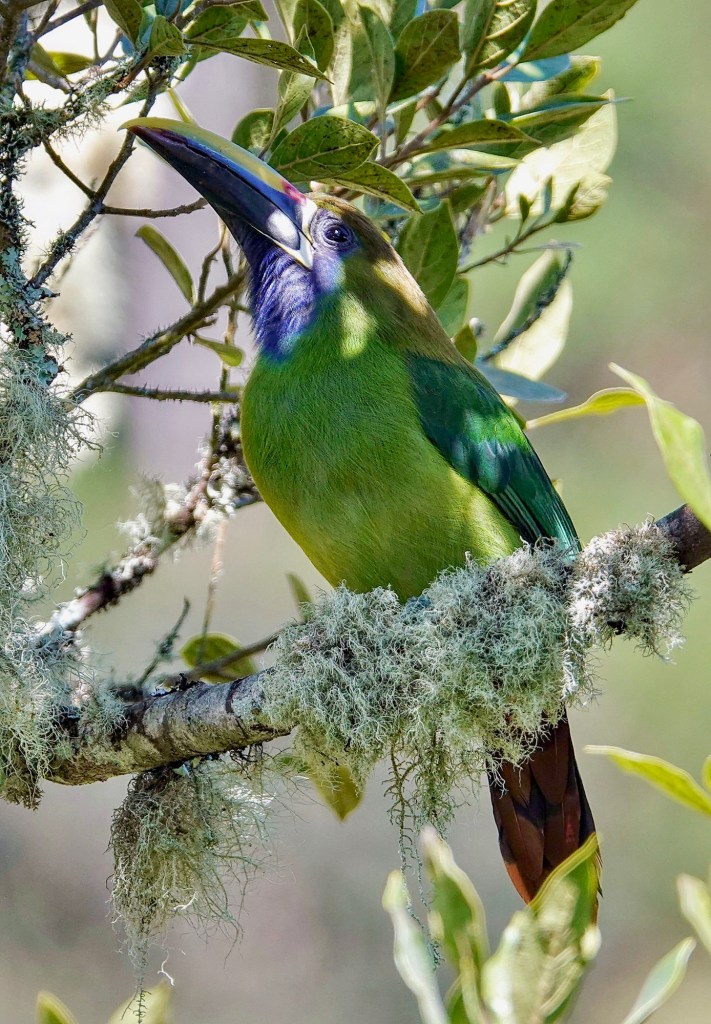
Emerald Toucanet: Miriam’s Quetzals, San Geraldo de Dota, Costa Rica, December 2022 — We return to images from my trip to Costa Rica last December and to the Emerald Toucanet…one of the highlights of our lunch stop at Miriam’s Quetzals up the mountain from our lodge. With birds like this off the back deck…who needs food! Sony Rx10iv at 600mm equivalent. Program mode with my custom birds and wildlife modifications. Processed in Pixelmator Photo and Apple Photos. ISO 320 @ f4 @ 1/500th.
Good by Zebra, good by Africa!

Plains Zebra: Lake Mburo National Park, Uganda, August 2022 — We have finally come to that moment…the last photo I took in Africa in 2022. This Zebra colt is saying good-by…good by to Uganda for another year. Just as well. I leave for India in a few days now, and I still have lots of photos from Costa Rica in December to share. 🙂 Sony Rx10iv at 100mm equivalent. Program mode with my custom birds and wildlife modifications. Processed in Pixelmator Pro and Apple Photos. ISO 100 @ f4 @ 1/500th. Good-by Africa!
Bluebird on a wet snow day…
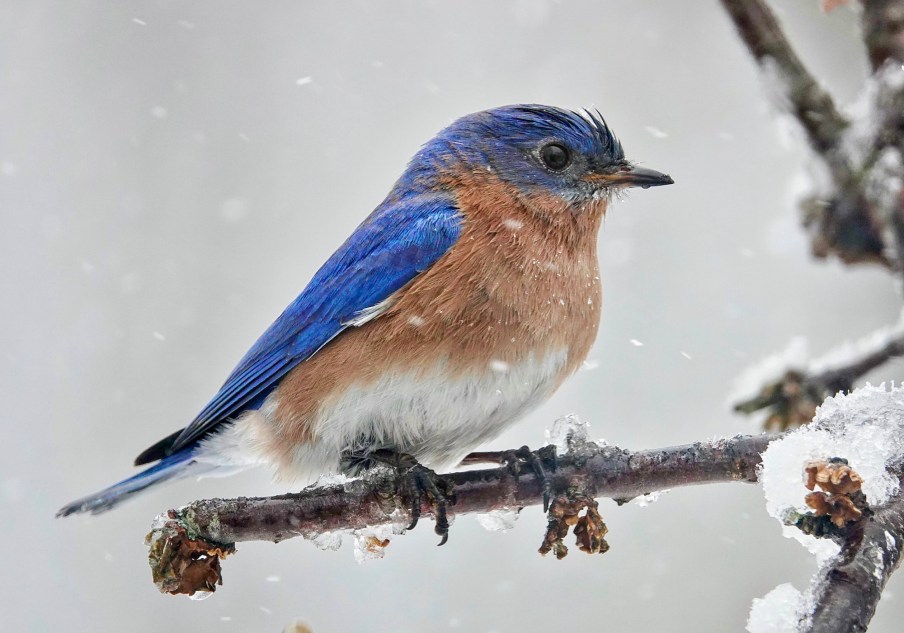
Eastern Bluebird: Kennebunk, Maine, USA, March 2023 — One last shot from the snowy Saturday. You can see how wet this Bluebird is. They were still busy around the feeders…coming for mealworms every few moments. Sony Rx10iv at 600mm equivalent. Program mode with my custom birds and wildlife modifications. Processed in Pixelmator Pro and Apple Photos. ISO 400 @ f4 @ 1/500th.
Uganda Edition: Jigsaw

Plains Zebra: Lake Mburo National Park, Uganda, August 2022 — The Zebra is abundant in East Africa, but is only found in two widely separated parks in Uganda: Lake Mburo in the south, and Kidepo in the north east. This is your classic jigsaw puzzle shot of three standing together. Sony Rx10iv at 150mm equivalent. Program mode with my custom birds and wildlife modifications. Processed in Pixelmator Pro and Apple Photos. ISO 160 @ f4 @ 1/320th. Plus .3EV (probably left over from a previous shot 🙂