Posts in Category: animals
Three-fingered Sloth


Every visit with Cope, a self-taught artist and naturalist in the small village of Flores near Gaupiles, in the Limon provence of Costa Rica is a rare treat. He knows where the owls and Potoos and bats of the area are roosting, and the little sanctuary he has created around his home is always teaming with an unbelievable number of interesting creatures, from Helmited Iguanas and Wood-rails to many varieties of hummingbirds. This December he had a family of Three-fingered Sloths living in his heavily vegetated yard…a male and a female with a young baby. On the first of my two visits we got to see the female and baby, close enough so we could have touched them, moving along a branch near Cope’s little stream. This sloth has been called “Three-toed” in most references and by most people for years, but there is a movement now to change the common name to “Three-fingered”. Both Central Amercain tree sloths (not, by the way, closely related at all) have three toes on each hind foot. The difference is in the hands and number of fingers. As you can see in the photos above, this sloth has three fingers on each forefoot. On the second visit we were just getting out of bus after a successful search for Specticaled and Crested Owls (and tent-making bats) when Cope called us urgently to come see. The male sloth was moving in the vegetation above a narrow trail, crossing from one side to the other. It is very dark under the low heavy canopy Cope as created. I had learned my lesson on my first visit and brought a flashlight this time, so I was able to illuminate and photograph the sloth without disturbing it. We watched it for 15 minutes or more, as it made its slow way across. Like an accrobat in slow motion on the rings and ropes, it used the vines and branches to preform a series of moves somewhere between yoga poses and styalized dance just a few feet above our heads. Totally fascinating. We could only stand and watch in wonder. Sony RX10iv at various focal lengths…the close up is at 400mm equivalent from about 6 feet. LED flashlight for illumination. Anti-motion Blur mode. Processed in Polarr.
Green and Black Poison Dart Frog

We spent a few hours at Dave and Dave’s Costa Rican Nature Pavilion while in the Sarapiqui region of Costa Rica. As I have said before, Dave and Dave, father and son, have created a rich habitat for wildlife and birds and an exceptional space for photography on the banks of the Sarapiqui River. They have feeders on the high bluff, at canopy level, that attract a wide variety of local species: from Toucans, through Tanagers and Honeycreepers, to hummingbirds. They also have a trail down the steep bluff to the river. It involves a lot of stairs up and down, and then, depending on water levels, a hike along the dry river bed. Sometimes the river is right at the foot of the stair, but the day we visited it was several hundred yards across river gravel and what must be an island at high water. Among the highlights of the hike down to the river are the Green and Black Poison Dart Frogs. They also have the much more common Blue-jean’s or Strawberry Poison Dart Frog, but Dave and Dave’s is an excellent place to find the Green and Black in high numbers. We found these in a brush pile near the foot of the stairs. According to Young Dave, the patterns are like fingerprints or Zebra stripes…no two are exactly alike. You can see that I have 5 different individuals here in the panel. Sony RX10iv at 600mm. Anti-motion Blur mode to handle the low light and long zoom. Processed in Polarr and assembled in FrameMagic.
Honduran White Tent-making Bats

One of the reasons I like to visit Cope, the artist and naturalist in the tiny village of Flores, near Gaupiles, Costa Rica, is that he always knows where there are Honduran White Tent-making Bats roosting, and he can generally find them. Tent making bats make a tent to roost in by chewing along the spine of large leaf until it collapses over them. They leave just enough spine intact to create a safe space. The rainforest where they regularly roost is full of such tented leaves and it is only a matter of checking enough of them to find one with bats inside. These shots were taken in the light of Cope’s flashlight, using Anti-motion Blur mode on the Sony RX10iv at about 80mm equivalent. It is a slow painstaking process to get in the right position for photography without touching the leaf and sending the bats flying, but Cope always seems to guide the whole group through it without disturbing the bats over-much. I always ask Cope to find us bats, and he has not failed in three visits, but his real speciality is owls and we were in the forest in search of Crested Owl and Spectacled Owl, both of which he also found for us. Bats are just a personal bonus for me. 🙂
Green Hermit, Costa Rica


I am back from 15 days in Costa Rica. I will, maybe, do a make up post in the next few days with some of the images I posted to Facebook and Instagram while on the trip. This is the Green Hermit, caught in the act at a little Soda (mom and pop restaurant) just over the continental divide in the Central Volcanic Range on the way from San Jose to Selva Verde Lodge. For $2.00 you get a cup of coffee, a slice of cheese quesadilla, and the privilege of watching birds coming into their feeders from the deck overlooking the San Francisco waterfall. Such a deal! Sony RX10iv at 600mm equivalent. Program mode. Processed in Polarr.
White Ibis

We spent the morning at Estero Llano Grande State Park and World Birding Center in Weslaco Texas yesterday. It was overcast but the birds were still beautiful on the pond by the Visitor Center, there was lots of activity around the trails. This White Ibis is caught in a classic pose over its reflection. Sony RX10iv at 600mm equivalent. Program mode. +1EV to deal with the bird silhouetted against the bright water. Processed in Polarr.
Impala!

On my safari in South Africa in September of 2016, the dominant species of antelope, by far, was the Impala. In fact, in South Africa they call the Impala the MacDonalds of the savanna: they are everywhere, they have a big M on their butt, and they are fast food. 🙂 Because of my experience in South Africa I expected much the same in Kenya. Not so. The Thompson’s Gazelle was the dominant species…found in beards the same size as the Impala herds of South Africa, and we did not see any large groups of Impala. We saw individuals, and small herds of up to 30 animals…often in association with Thompson’s and/or Grant’s Gazelles, but nothing like the numbers or the concentrations I saw in South Africa. This handsome Impala buck is from Tsavo West. Sony RX10iv at 450mm equivalent. Program mode. Processed in Polarr.
On Safari

This is the magic of being on Safari in Kenya. Standing up in the Safari Van, with our heads above the open roof, the wildlife often came to us. Of course it was the the skill of our pilot, John Osege, to put us in the right place at the right time for these views, and, over and over, he managed to do just that. There is nothing like it! Sony RX10iv at about 110mm equivalent. Program mode. 1/1000th @ f4 @ ISO 100. Processed in Polarr.
Warthogs


We also saw Warthogs everywhere we went on our Kenya Safari, but I did not come back with many photos. Again, put it down to prejudice. I have yet to learn to like Warthogs, and they are so common…or put it down to they were always far off and generally running fast. Or put it down to I never saw The Lion King. All of the images above, except the first, are from Hell’s Gate National Park, where foot and bike traffic has acclimated the Warthogs to human presence, and they don’t bolt as soon as the van stops. The first image of the Warthogs feeding is from Amboseli and was taken at full telephoto from a distance. I am sure Warthogs have many redeeming characteristics when you get to know them. Evidently “tastes good” is not one of them, or there would be far fewer of them. Sony RX10iv mostly at 600mm equivalent. Program mode. Processed in Polarr.
Bohor Reedbuck

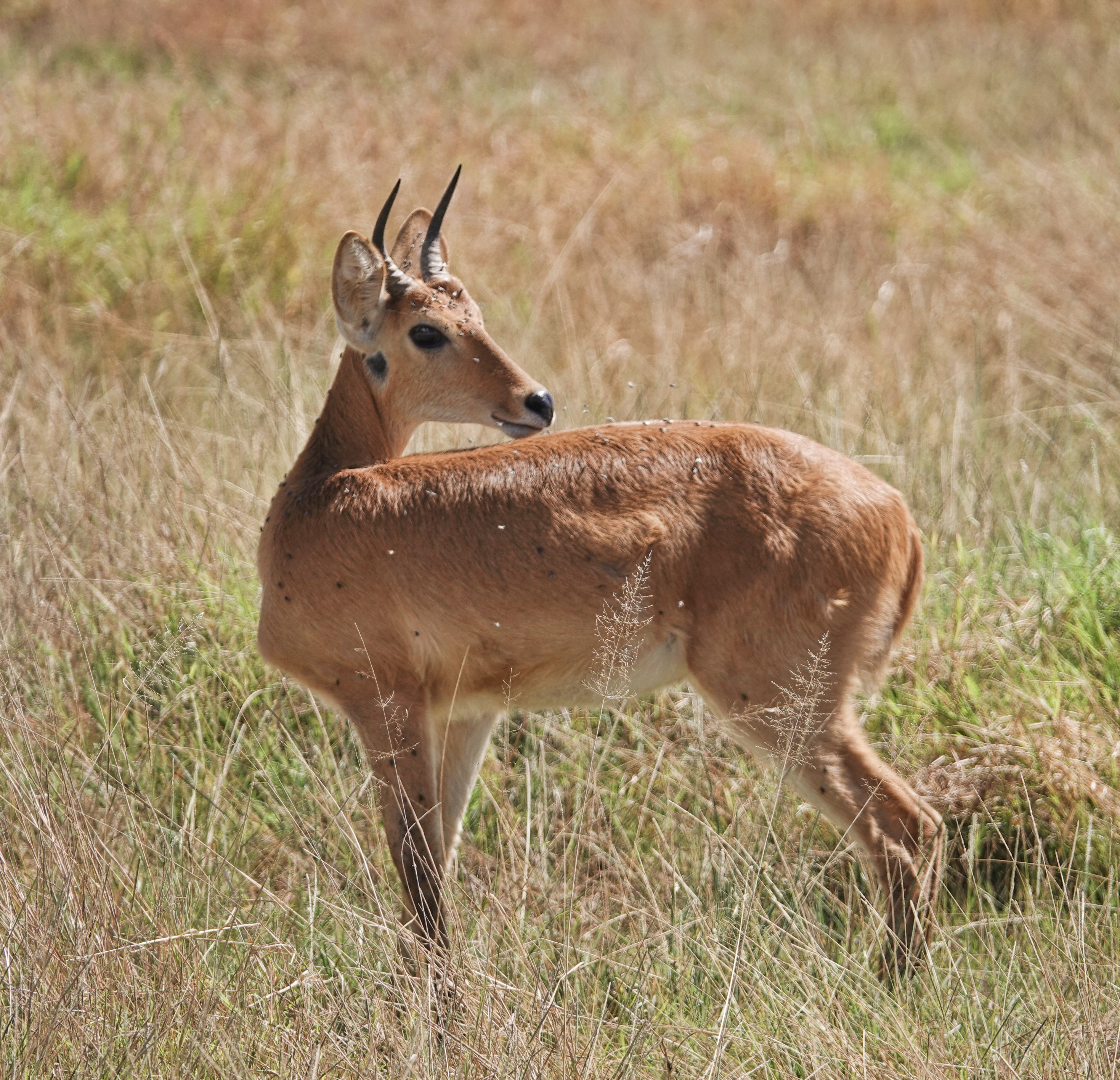
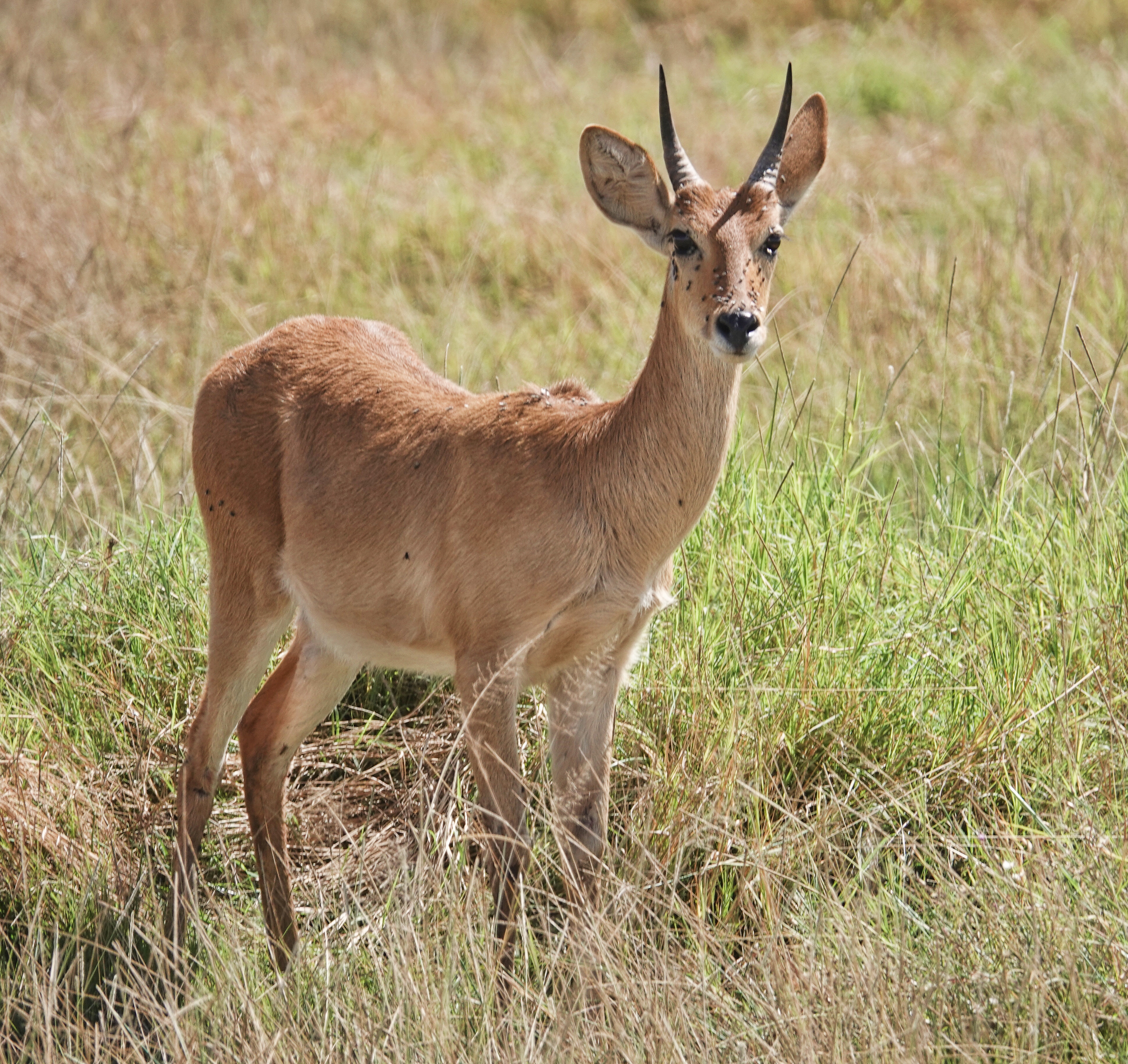

Driving through the marsh at Amboseli National Park, we found this Bohor Reedbuck, rarely seen in daylight, standing not far from the track. The Reedbuck is only found in the marsh and the marshy edges of Lake Amboseli in the park, and spends most daylight hours hunkered down in deep grasses, hiding from predators. Only the males have horns. Sony RX10iv at 600mm equivalent. Program mode. Processed in Polarr.
Thompson’s Gazelles
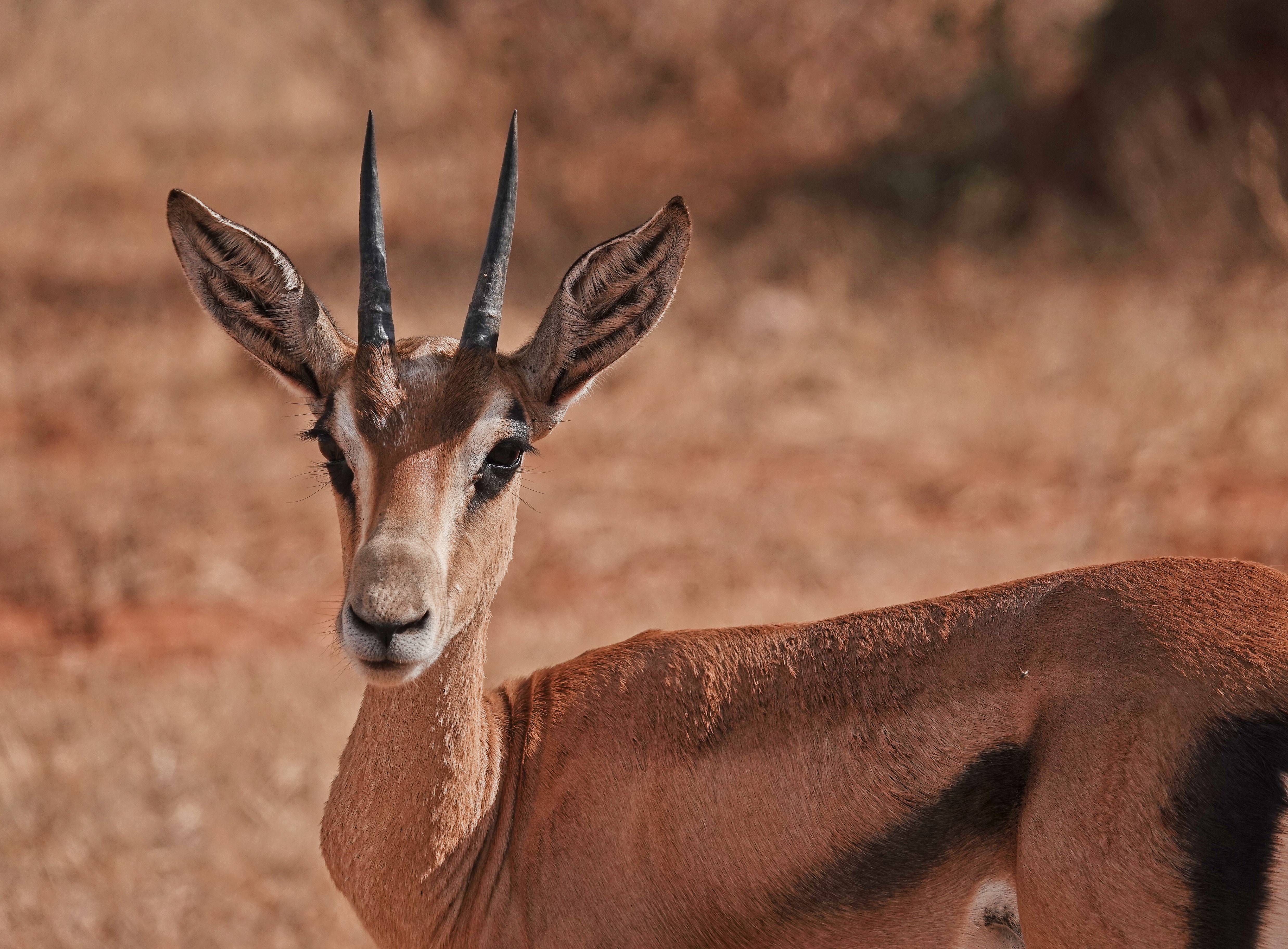
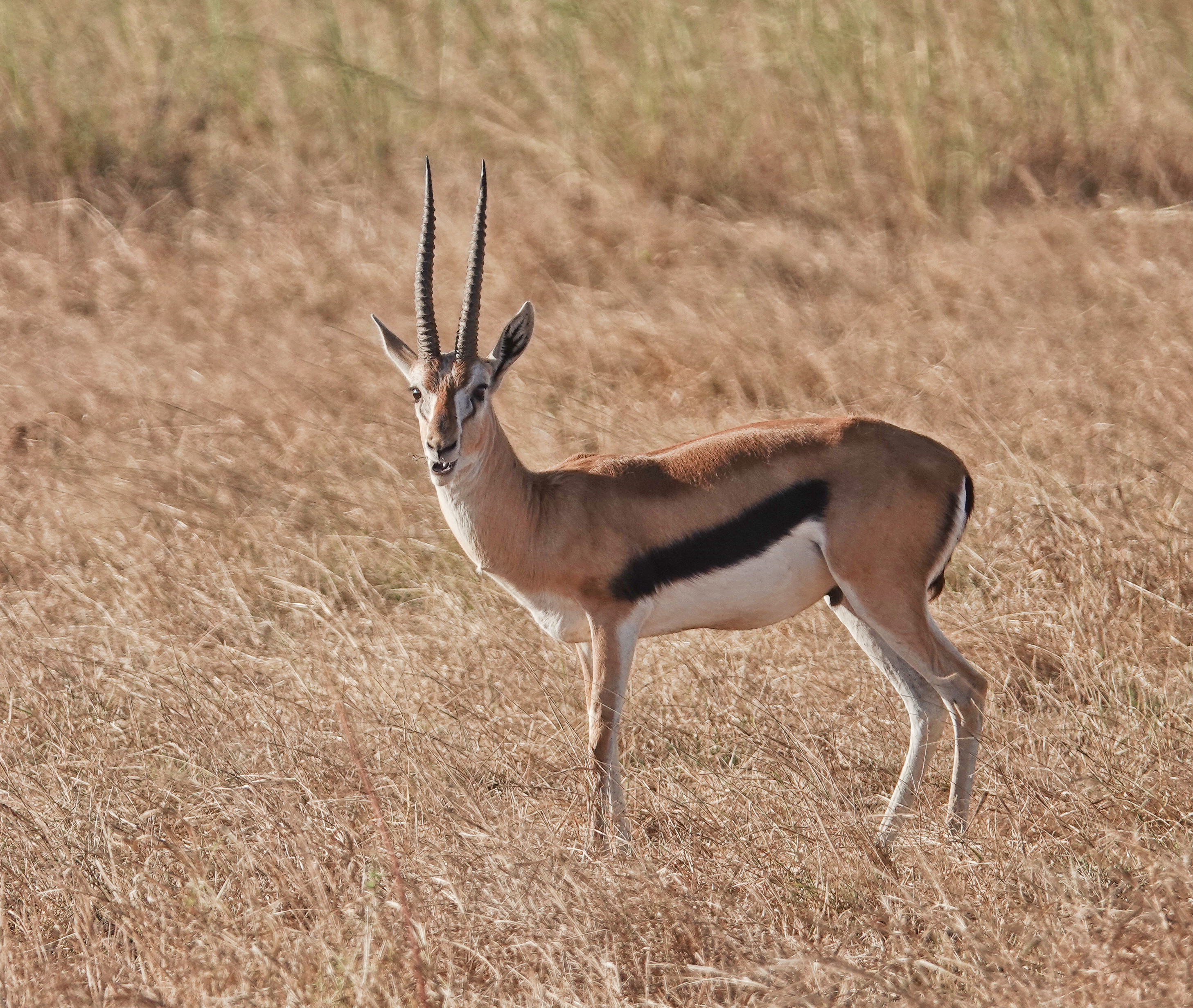


We saw Thompson’s Gazelles in every park or reserve we visited in Kenya. The images above are from Tsavo East, Amboseli, Crescent Island on Lake Naivasha, and Masai Mara. They were, on our visit at least, by far the most numerous of the antelope species, perhaps because their preferred habitat is also the most common in East Africa. They are on the smallish size, smaller then either the Impala or Grant’s Gazelles they often associate with…and the black slash on the side makes them stand out even at a distance. Sony RX10iv at various focal lengths at the long end of the zoom. Program mode. Processed in Polarr.