Posts in Category: Africa
Mongoose on sentry


One of the classic images of Africa has to the the Mongoose standing sentry. In this case, the Banded Mongoose, and in two different parks. the dry savanna is in Tsavo East, as far east as we got, and the burnt savanna is from Masai Mara, as far west as we got. Mongooses, however, are the same the world over 🙂 Sony RX10iv at 600mm equivalent. Program mode. Processed in Polarr.
Masai Giraffe: Crescent Island

Masai Giraffe, Crescent Island, Lake Naivasha, Kenya
A young Masai Giraffe apparently bending down to look in the windows of our Safari Van as we passed, on our way back from Crescent Island on Lake Naivasha in Kenya’s Rift Valley. Crescent Island is where the non-predictor scenes in Out of Africa were filmed. They brought in the animals and let them loose what was then an island. Of course they also built a causeway to bring the gear in, and the animals have spread to the adjacent shore of the lake, especially the Giraffes. The whole area is operated as a private reserve now, and you can actually get out and walk among the animals, for a unique experience of African wildlife. Sony RX10iv at around 280mm equivalent. Program mode. Processed in Polarr.
Handsome Zebra, Lake Nakuru

Lake Nakuru National Reserve, Kenya
At the end of a full day in Lake Nakuru National Reserve, as we were headed out, we came up on a small group of Zebras standing in light forest. This handsome young lady (I think, lady that is, handsome is for sure) was standing right by the side of the road, up on a little rise, just perfectly posed, so of course we had to stop for photos. Every Zebra’s pattern is, or so Zebra folk say, totally unique, in much the same way our finger prints are. This one has, I think, particularly fine patterns on her legs. Sony RX10iv at about 80mm equivalent. Program mode. Processed in Polarr.
Hippos in the Mara River

Mara River, Masai Mara, Kenya
John, our pilot on our Kenya Safari, was under the mistaken impression that we only had one day in the Masai Mara, so he adopted a “see everything” policy that took us from the north east corner of the reserve all the way to the Mara River in the south. The Mara is famous for its Wildebeest crossings during migration. We were there at the right time, but the water was too high. Still there are Hippopotamuses and Crocodiles…both of which we did see. These photos were taken from the bluff on the north side of the river, looking down. Sony RX10iv at 600mm equivalent. Program mode. Processed in Polarr and assembled in FrameMagic. Note the Common Sandpiper (very much like our Spotted Sandpiper in both looks and behavior) on the back of the Hippo in the top image 🙂
More of Amboseli’s Elephants
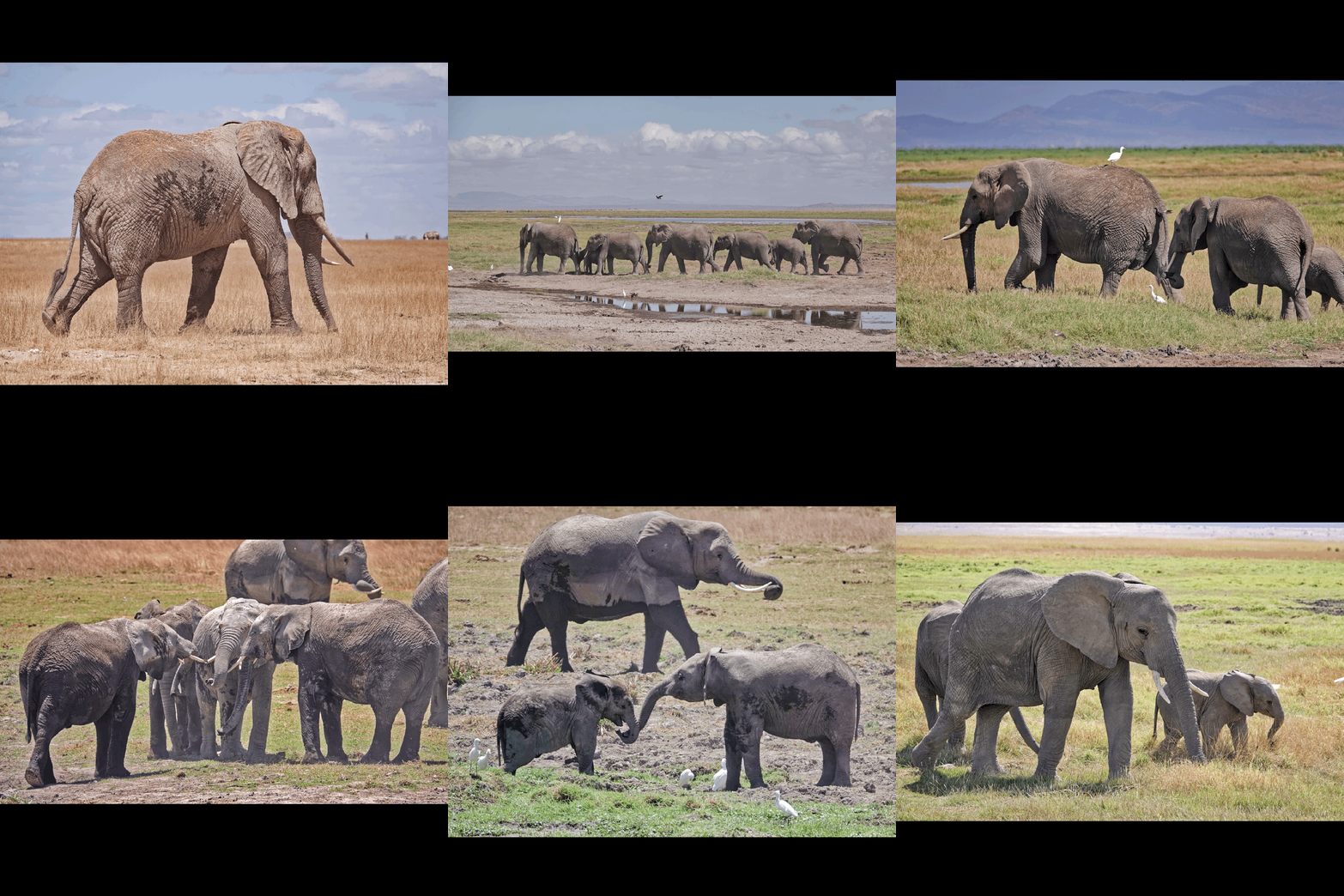
Amboseli National Park, Kenya
We saw many elephants in Tsavo East National Park and many in Masai Mara, but by far the most in Amboseli. The well watered marshes and old lake bed are lush grazing for elephants. Sony RX10iv in Program mode. Various focal lengths. Processed in Polarr and assembled in ImgPlay.
Eastern Black and White Colobus Monkey

I was surprised, and delighted, to find a large family group of Eastern Black and White Colobus Monkeys on the grounds of Elsamere Lodge where we stayed on Lake Naivasha, in the Rift Valley of Kenya. The field guides I had studied before leaving home show the primate at higher elevations and in much more dense forest. (The Colobus has a limited range in the Masai Mara, mostly around Siana Springs Camp…not anywhere near where we were going.) It is a beautiful creature. From what I can find on-line the Colobus at Elsamere are natural residents and have been living there for several generations at least. Sony RX10iv at various focal lengths. Program mode. Processed in Polarr.
Bustards and Baboons
Another Encounter story from Kenya. Wait for it to load and then page through using the controls in the bar at the top or bottom of the panel. You can expand it to full sceeen by touching the icon in either bar.
Cokes Hartebeest


In my opinion, one of the oddest looking of Africa’s antelope species, the Cokes Hartebeest. The close ups were taken at Tsavo West National Park in Kenya, and the full body shot at Tsavo East. It is a heavy-set animal, with high shoulders which make it look taller in the front than in the back. But it is that long face, with the horns set so high and close together, and the bulb of a nose that stand out for me. It is also among the most common and wide-spread of the African antelope species. We saw them in every park and reserve we visited in Kenya. Sony RX10iv at 600mm equivalent. Program mode. Processed in Polarr.
Vervet Monkey


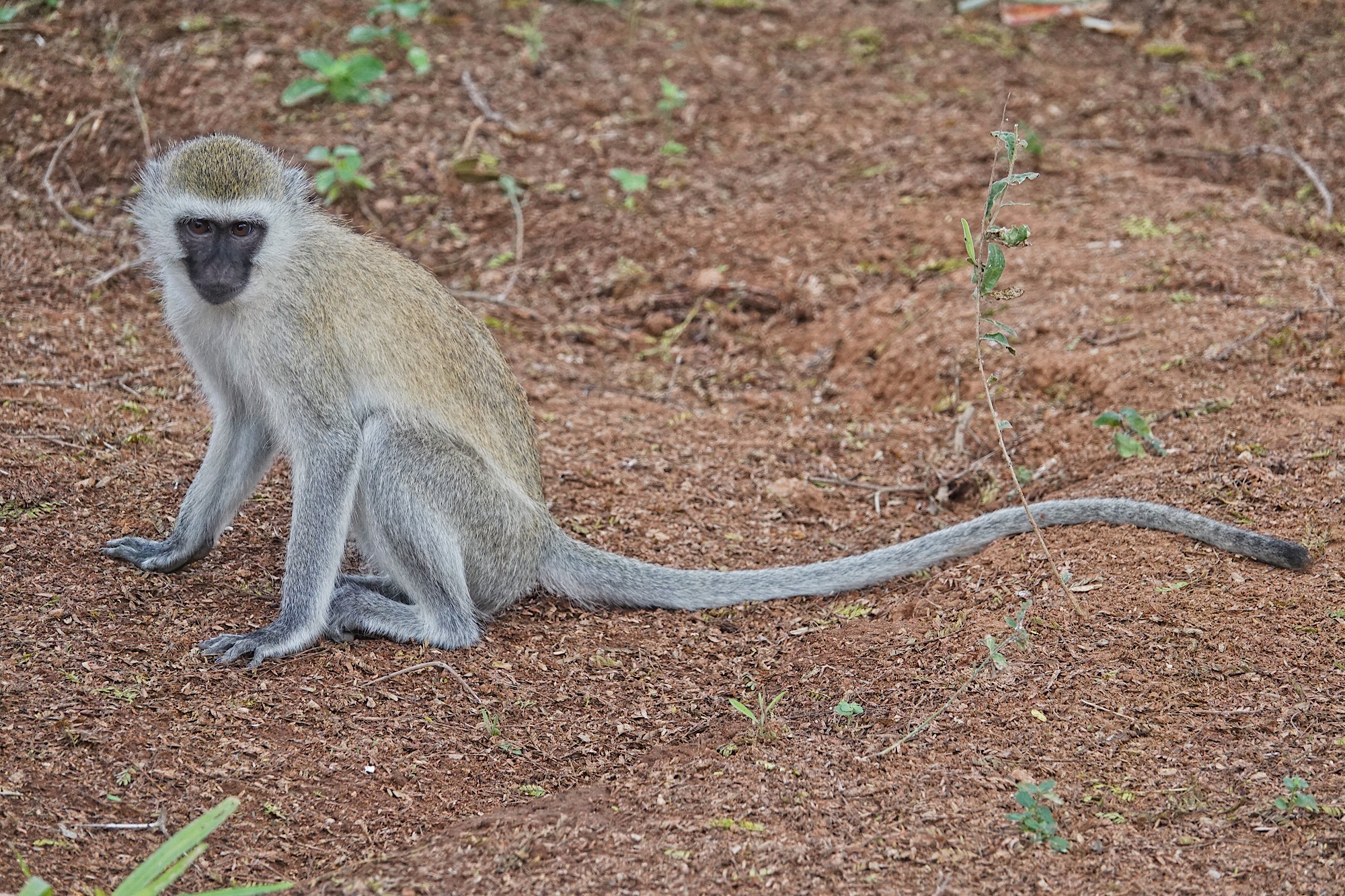
The most common monkey of all of sub-Sahara Africa is the Black-faced Vervet. It seems to have an affinity for humans (or perhaps only for human food) and is very apt to be seen around camps and lodges. In South Africa when I visited they were a real problem at lodges…so bold that at least one person was assigned to monkey duty at each meal, otherwise they would have been up on the tables helping themselves whenever your attention wavered. Even with a guard they got away the occasion slice of fruit or toast. In Kenya they were much more shy…or perhaps not as hungry…or the camp staff have done a better job of training them to be unobtrusive. Only at one camp we visited for lunch were there any number of them…yet we saw large troops in the bush. These shots are from a lodge well within Tsavo East National Park. Sony RX10iv at various focal lengths. Program mode. Processed in Polarr.
More of Amboseli’s Elephants on the move…


On our first afternoon drive at Amboseli National Park in Kenya, it was obvious that our driver was on a mission. He did not tell us what the mission was, but you tell that he was more or less killing time until something happened, and that he needed to be in right place at the right time for us to see it. As the sun started to set, the CB radio came alive with excited chatter and the final race was on. It is evidently a matter of some pride among the drivers to get their clients as close to the spot where the elephants choose to cross the road on that particular afternoon on their way to the slightly higher ground in the north section of the park to spend the night. There are several trails. As a guide, you can’t afford to guess wrong and have your clients miss the whole thing…and you can’t come late or they will be at the very back of the press of safari vans with not much of a view, and you can’t come early since your vehicle in the path might turn the herd to another trail. Timing is everything. You need among the first to arrive after the herd is committed to a trail. We were one van length from the trail they used that day. A bit crazy perhaps. I had to wonder would happen if one of those huge creatures decided to come through us instead of through the gap…but they all thundered through 20 feet from us. The shot above is of one of the “pioneer” elephants who was already across the road when we arrived, but within the next 10 minutes the heard joined him and they moved off to the north. The link below is to a video slideshow of the experience.